
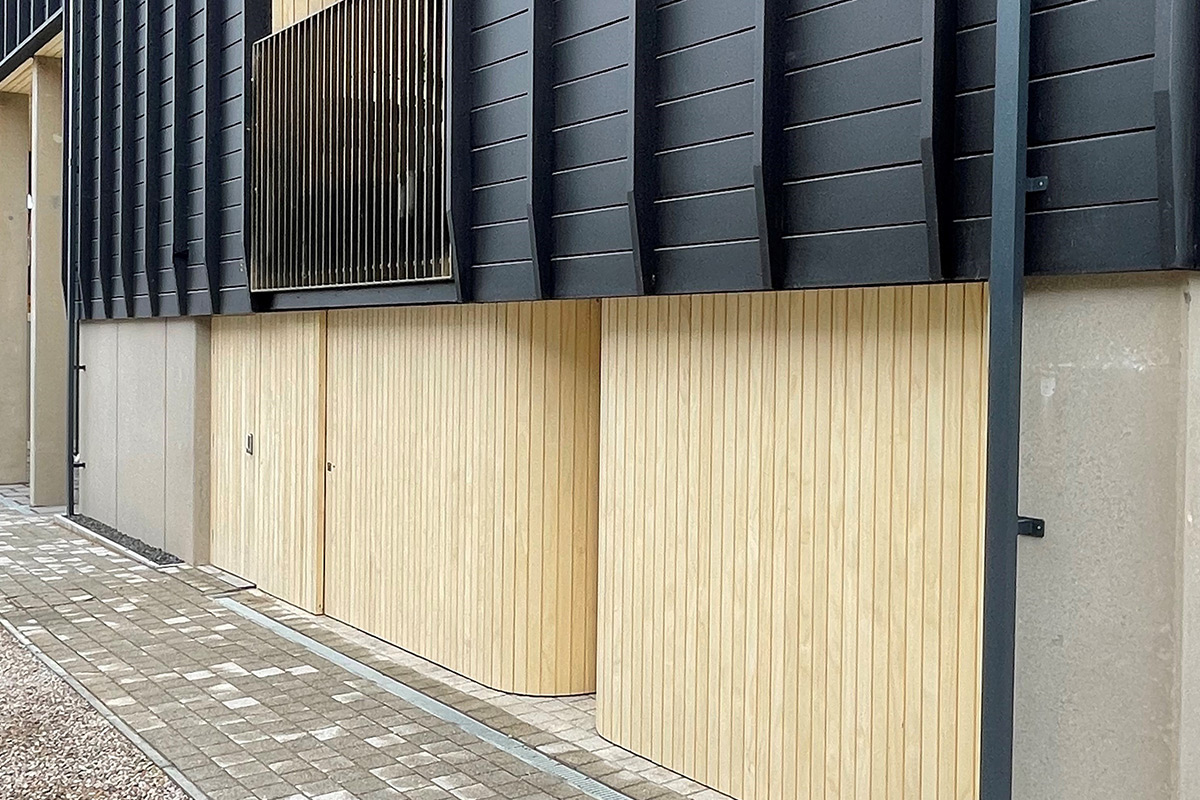
There is a moment in every serious architectural project where the choice of material stops being a technical decision and becomes a design one. It is the moment when the question shifts from what will perform to what belongs and what will read correctly within the architectural language of this particular building, on this particular site, for this particular client. And this is that moment where the most meaningful conversations in our experience about garage doors tend to begin.
The range of materials from which a bespoke door can be made is, in itself, unusually broad. Timber species include European oak, larch, cedar, hemlock, sapele, iroko, spruce and Douglas fir, each with distinct characteristics in terms of grain, colour, density and how it responds to treatment and weathering over time. Beyond timber, doors can be manufactured in high-strength extruded aluminium, insulated steel, glass, copper, Corten steel, bronze, and even facade panels clad in the same material as the surrounding wall. The range is not presented as a menu. It is a toolkit, and knowing which tool belongs on which project is where our genuine expertise becomes directly relevant.
That expertise is perhaps most clearly demonstrated in the treatment of timber surfaces — and in the growing use of SiOO:X, the patented Swedish silicate wood protection system that has become an increasingly important part of certain projects, where the long-term appearance of natural timber becomes primary design consideration.
Untreated timber weathers. In a well-designed building, that process can be beautiful. But it is also slow, uneven, and difficult to predict as it is influenced by aspect, exposure, microclimate and the specific characteristics of the species involved. For a project where the building has been designed to sit quietly and consistently within its landscape from day one, years of gradual, patchy weathering represent a genuine design problem.
SiOO:X addresses that problem directly. As a two-part penetrating system, it works within the cellular structure of the timber rather than coating its surface, forming a network of silica crystals bonded into the wood fibres themselves. No peeling, no cracking, no moisture trapped beneath a surface film. It allows timber to breathe and move naturally. And critically, it accelerates the silvering process that timber undergoes when exposed to the elements, compressing what would otherwise be years of unpredictable weathering into a consistently toned, silver-grey finish. For coastal settings, heritage contexts or contemporary projects where material honesty is fundamental to the design intent, that is not a minor detail.
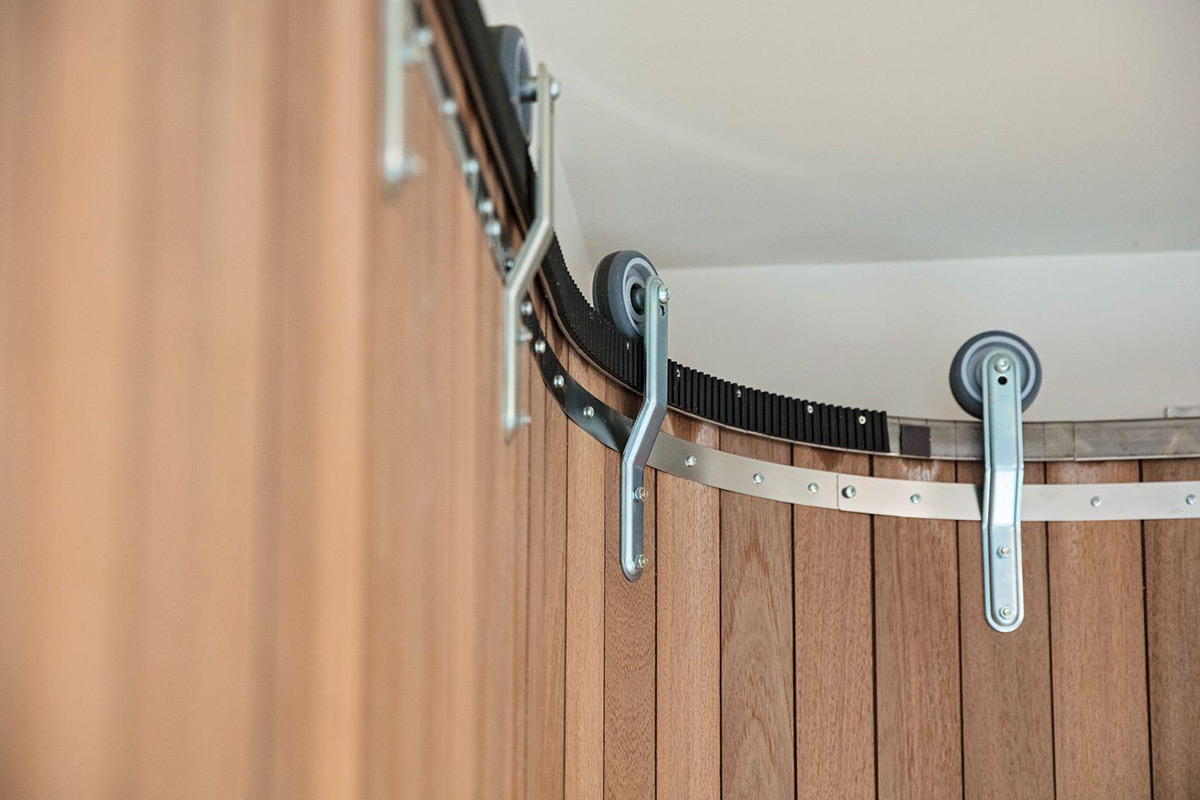
Aluminium presents a different set of considerations. Where timber is chosen for its warmth, its grain and its capacity to age with character, aluminium is often specified for its precision, its consistency and its performance in demanding environments. It can be powder-coated to any RAL or BS colour, or produced with faux-wood surfaces where the visual language of timber is required but the maintenance profile of metal is preferred. Each material has a context in which it is the right answer. Identifying that context is the work and often a personal choice..
This is why the conversation at Rundum Meir UK begins with the project rather than the product. What is the architectural character of the building? What are the other materials on the elevation, and how will the door relate to them over time? What are the conditions of the site, and how will those conditions affect the material’s long-term performance and appearance?
The answers to those questions shape the specification. And the specification, when it is right, produces a door that does not merely fit the building but rather belongs to it.
For more information about how Rundum Meir UK works with architects and specifiers on material specification, contact the team directly