
TIMBER SECTIONAL GARAGE DOORS
Specification guidance for architects
Timber sectional garage doors have become an important architectural feature in high-value residential projects across the UK. They play a defining role in shaping a building’s façade, adding visual appeal and long term performance for the end user.
For architects and specifiers, the garage door must integrate seamlessly with the building’s design intent while meeting structural, thermal, acoustic and automation requirements.
Early specification is essential. When considered late in the design process, garage doors often compromise façade detailing and spatial planning, which will compromise a project’s success.
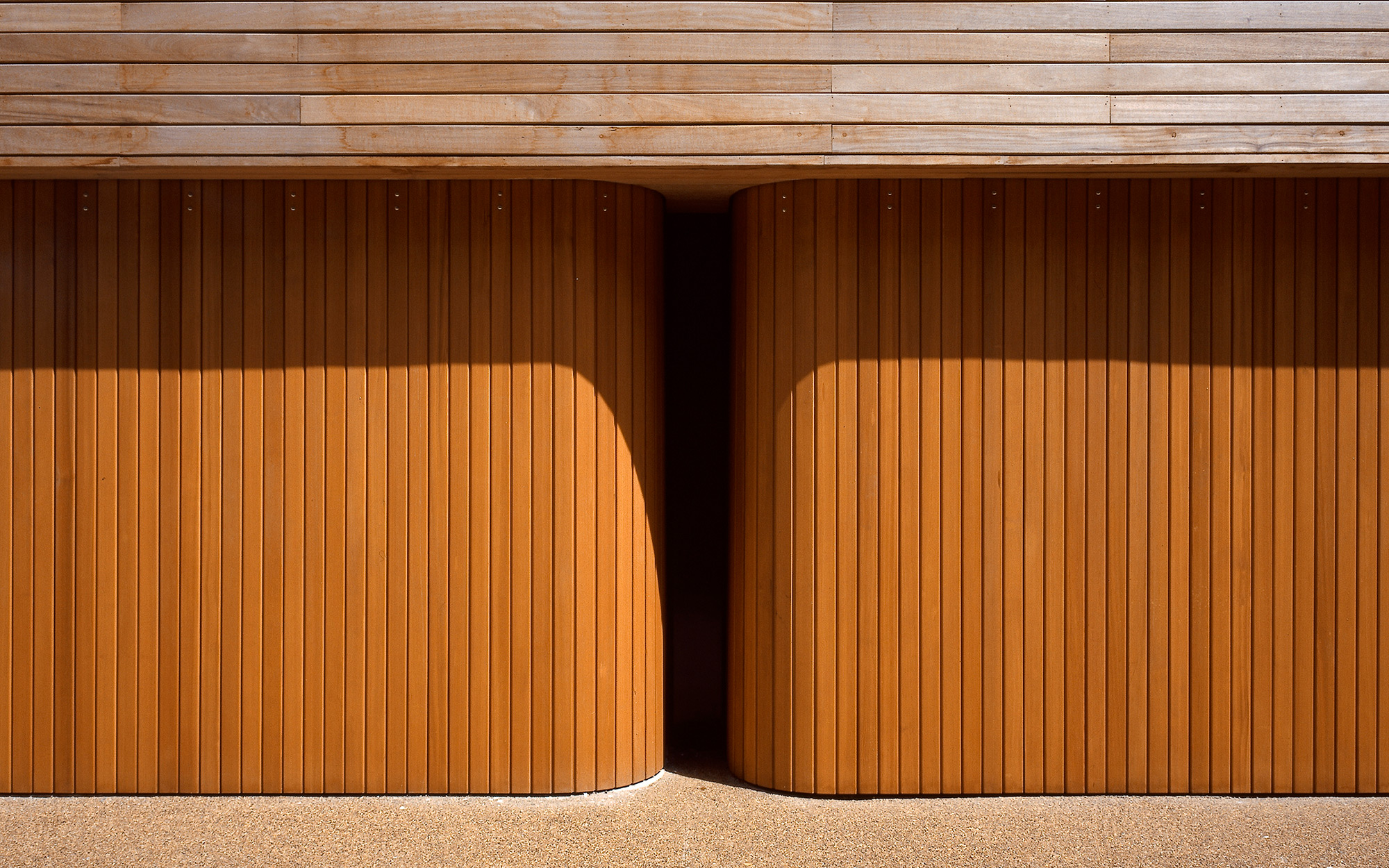
Timber sectional doors – an overview
Timber sectional garage doors are constructed from multiple horizontal or vertical panels that move along a guided track system.
Unlike traditional up-and-over doors, sectional systems operate in controlled segments, reducing mechanical stress and allowing greater flexibility in design.
There are two main configurations:
Overhead sectional timber doors
- Panels lift vertically before tracking beneath the ceiling
- Ideal for projects requiring a clean, uninterrupted façade
- Suitable for wide openings with sufficient headroom
Side sliding sectional timber doors
- Panels move laterally along an internal wall
- Particularly useful where ceiling space must remain unobstructed
- Allow partial opening for pedestrian access
Both systems can be engineered for bespoke openings, including non-standard widths and complex architectural contexts.
Why specify timber sectional doors
Architectural integration
Timber offers a level of material authenticity and visual appeal that steel and composite systems struggle to replicate. In luxury and high-value properties, garage doors often sit alongside timber cladding, joinery, or feature façades.
A bespoke timber sectional door can be matched in grain, tone and finish, ensuring visual continuity.
Flush detailing, concealed hardware and uninterrupted panel lines allow the garage door to form part of the architectural appeal rather than appearing as a standalone element of a building.
Material authenticity and craftsmanship
Premium species such as European Oak, Larch, Cedar, Sapele and Iroko offer depth of grain and tonal warmth. When constructed from consistent timber selections, colour continuity and veining patterns remain uniform across the façade
This approach is particularly important on luxury projects, where inconsistency in material finish becomes immediately noticeable.
Sustainability
Timber aligns with the increasing emphasis on lower embodied carbon and responsible sourcing within UK construction, as part of the UK Government’s Net Zero Strategy.
When procured from managed forests, timber provides a renewable material option that supports sustainable design strategies
Compared to steel, timber carries a significantly lower embodied carbon profile. For architects working toward Net Zero objectives, this contributes positively to whole-life carbon assessments.
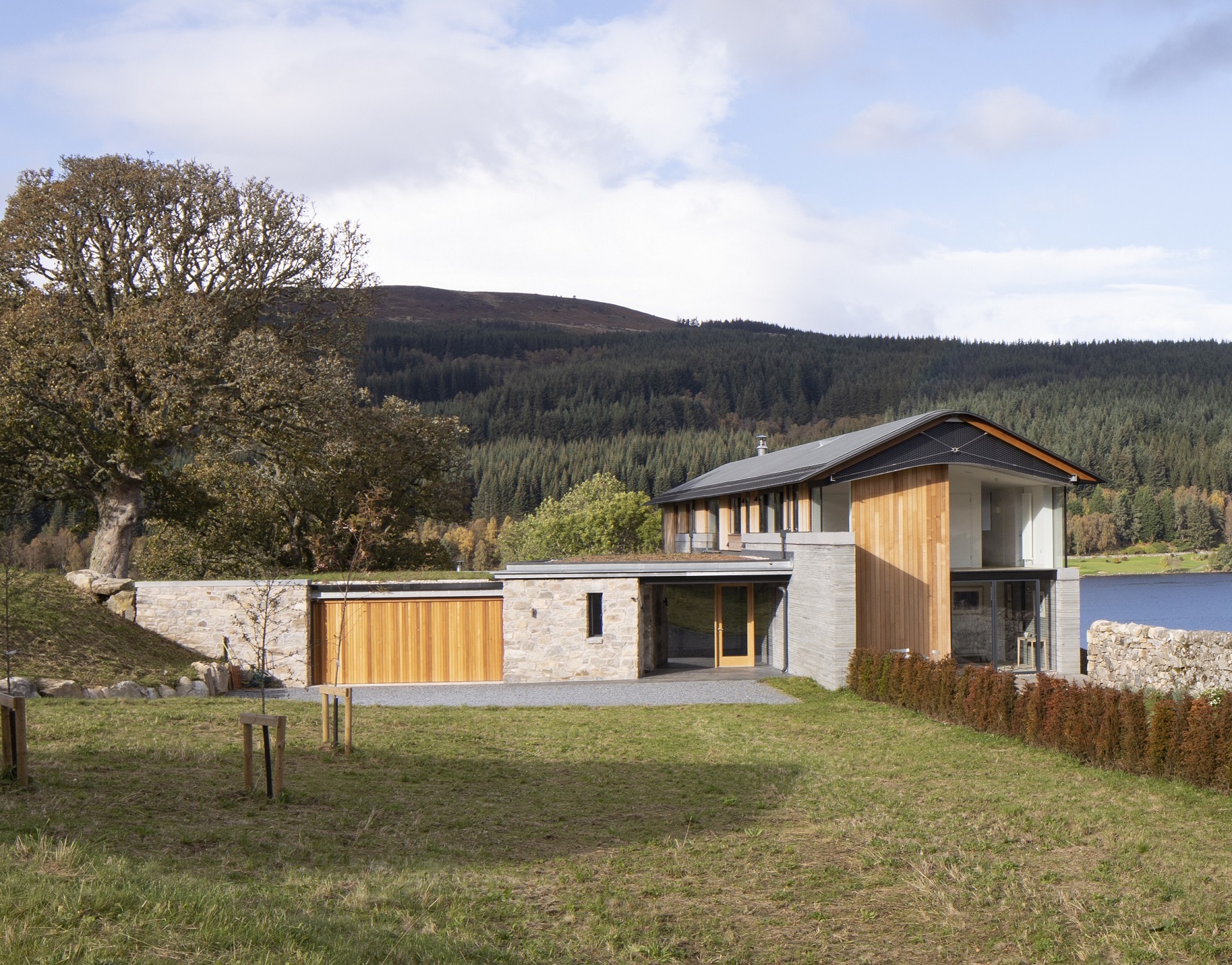
Types of timber sectional garage doors
Overhead timber sectional doors
Overhead sectional timber doors consist of insulated panels that rise vertically and track into ceiling-mounted guides. Modern systems incorporate torsion spring mechanisms to ensure smooth, balanced movement.
These doors are suited to:
- Contemporary façades requiring minimal visual interruption.
- Wide-span openings.
- Projects where automation and insulation are key priorities.
Automation systems are typically concealed internally to preserve external appearance.
Click here for more information
Side sliding sectional timber doors
Side sliding sectional systems move horizontally along a top track fixed parallel to the internal garage wall. Track options may include a traditional u-channel with drainage or surface-mounted systems depending on detailing requirements
Advantages include:
- No ceiling-mounted tracks, preserving internal headroom.
- Reduced structural intervention overhead.
- Partial opening for pedestrian access.
- Compatibility with conservation and heritage-sensitive façades.
For projects with tight headroom or sloped sites, side sliding sectional doors offer practical and aesthetic flexibility.
Click here for more information
Key specification considerations
Opening size and structural interface
Architects should consider the following:
- Clear structural opening dimensions.
- Headroom requirements.
- Side room allowances for track systems.
- Load transfer points for torsion springs and guide rails.
Early coordination with structural engineers prevents site modifications and ensures correct tolerances.
Thermal performance
Where garage doors form part of the thermal envelope, insulated sectional panels become critical. Multi-layered core construction, perimeter seals and precision installation and detailing help reduce air leakage.
This improved thermal performance supports compliance with Part L of the Building Regulations.
Acoustic performance
Garages adjacent to living areas require attention to sound control. Timber’s inherent mass, combined with acoustic seals and insulated cores, can reduce noise transmission, supporting compliance with Part E where relevant.
Automation and smart integration
Automation is now an expected feature in high-value homes. Modern systems integrate with remote transmitters, smartphone connectivity and compatibility with wider smart home platforms.
Importantly, automation can be incorporated without visual compromise. Even complex or curved sliding installations remain compatible with motorised systems
Security and safety
Sectional systems must include:
- Secure locking mechanisms
- Obstacle detection sensors
- Anti-lift protection
- Compliance with UK safety standards for powered doors
Security should not undermine design integrity. Concealed systems ensure performance without external clutter.
Addressing common architectural challenges
Designing garage doors for high-end projects frequently involves:
- Limited headroom
- Narrow reveals
- Large or irregular openings
- Conservation area restrictions
- A desire for concealed mechanisms
When garage doors are specified late, visible tracks and frames can disrupt façade alignment
Bespoke timber sectional systems resolve these challenges by adapting track configurations, panel sizes and opening geometry to the architectural intent.
Timber species used in sectional garage doors
The performance and appearance of a timber garage door are heavily influenced by the species selected.
Different timbers offer varying characteristics in terms of density, durability, grain pattern, and colour. Commonly specified species include:
- European Oak: Dense and durable, with pronounced grain. Suitable for heritage and contemporary applications where longevity and character are priorities.
- Cedar: Naturally resistant to moisture and decay, with a lighter appearance and consistent grain. Often specified for contemporary façades and cladding continuity.
- Larch: Durable softwood with strong grain definition. Performs well externally and weathers attractively over time.
- Iroko: A hardwood often used as an alternative to teak. Offers good durability and a rich colour, suitable for exposed conditions.
- Sapele: A hardwood with fine, consistent grain and warm tones, commonly used where visual refinement is required.
- Douglas Fir: Known for strength and stability, with a distinctive grain pattern and good structural properties.
Using a single piece of timber per door or panel is an important construction principle, helping to maintain colour consistency and aligned grain patterns across large openings.
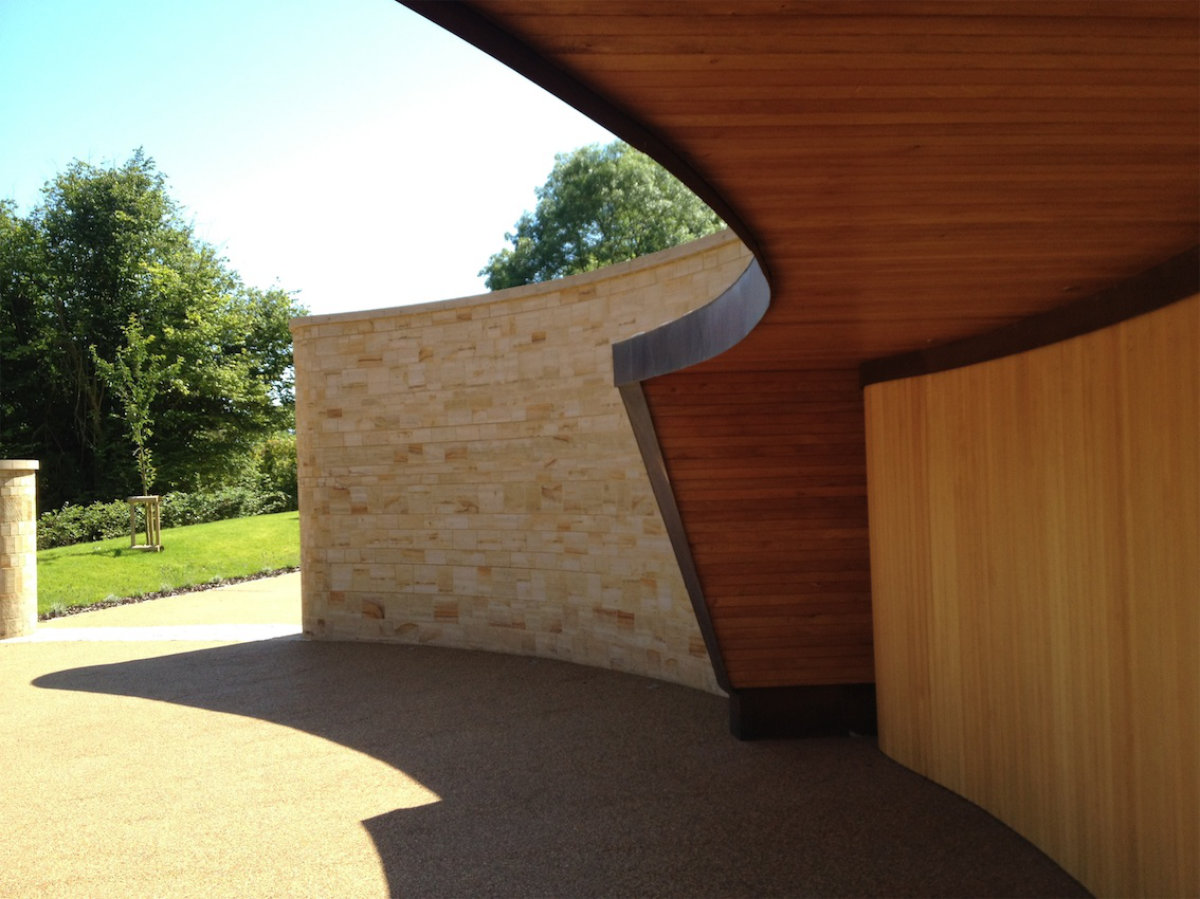
Why partner with Rundum Meir for your timber sectional garage doors?
We have designed and supplied over 100,000 garage doors all over the world in our fifty-year history.
Combining stunning aesthetic properties and German engineering, Rundum Meir’s range of quality garage doors complement many architectural styles, ranging from heritage Grade II listed buildings right through to modern, contemporary styles.
Our dedicated technical team are on-hand to offer you or your architect guidance and support at every step of the design process. Contact us by either telephone 0151 280 6626 or email info@rundum.co.uk